▣ WOLFOSEDUCATION WITHOUT LIMITS← Back to Project Types
Chicago Metro History Day · Student project guide

Documentary Project

Historical film. Learn the specific rules, explore examples and get ready to present your work.

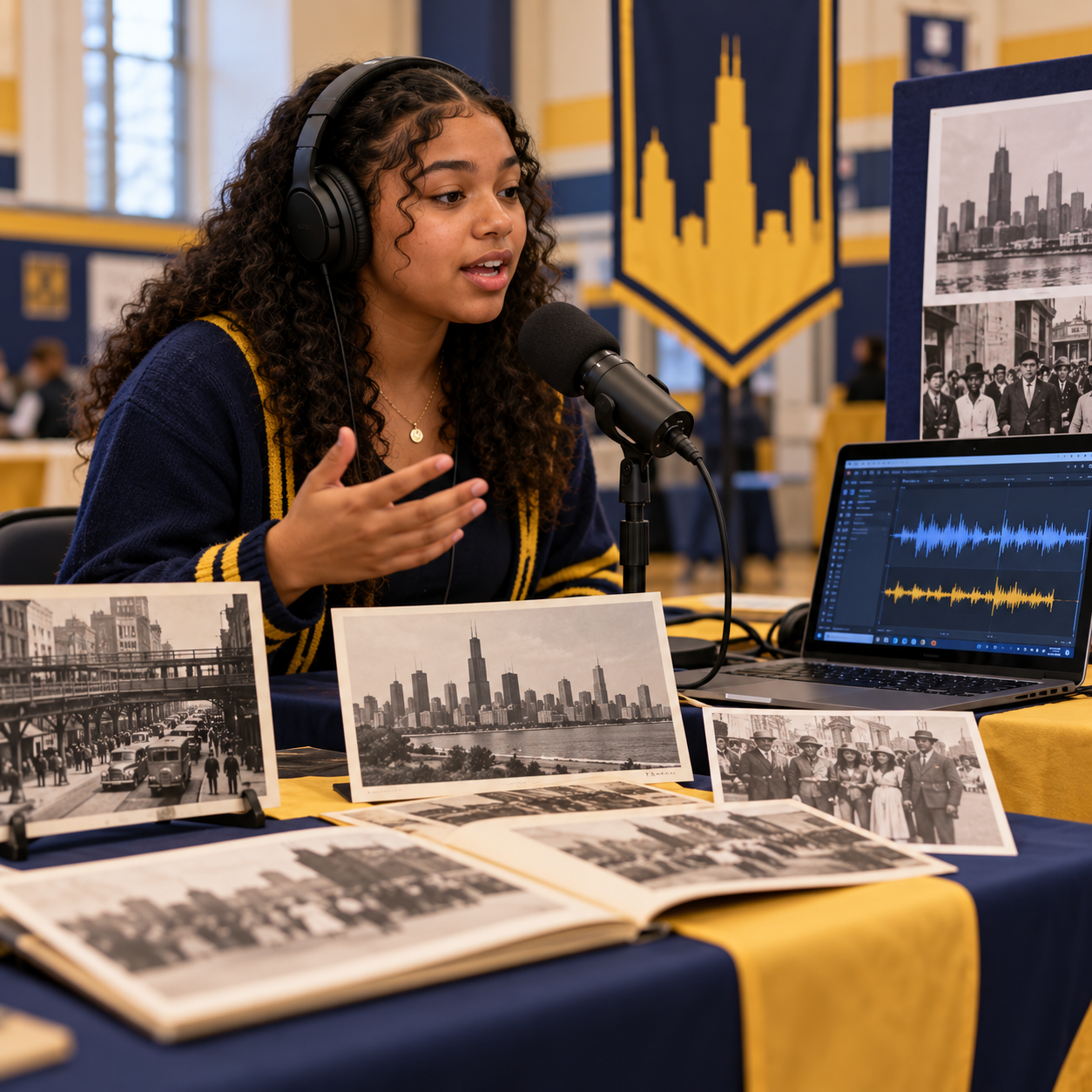
Student recording and editing a history documentary

01 · Documentary requirements

Film running time10 minutes maximum, including credits
ParticipationIndividual or group of 2–5 students
Student productionStudents plan, direct, record, edit and produce the documentary
Required documentsTitle page, process paper (500 words maximum), annotated bibliography
AttributionCredit quoted, visual and audio materials as required by the contest rules
PlaybackTest the final file and follow local equipment and submission instructions

Summarized from the uploaded WolfOS Documentary Guide. These are category requirements, not a substitute for the current NHD and CMHD rules.

Official category rules ↗

02 · Producing the documentary

01 · Plan the sequenceOutline scenes, visuals, narration, speakers and approximate running times.
02 · RecordCapture clear narration and original footage; assemble a rough cut.
03 · EditKeep archival visuals legible, sound balanced and music beneath narration.
04 · Finish and checkAdd readable labels and credits; watch the full export and test it on another device.

Judging and submission

Judges consider whether the documentary communicates clearly without extra oral explanation and whether editing, narration, images and sound support the historical subject. Before submitting, verify the runtime, source credits, working file, backup, title page, process paper and bibliography.

03 · Authentic student examples

The Jane Collective by Lisa Duan and Ana Bojinov is featured in full below. Other authentic Chicago Metro History Day examples listed in the uploaded WolfOS guide include Soul Train, Soul Change by Avery Kelley and Fighting Jane: How the “Little Lady” Broke the Chicago Machine by Clara Biela.

View original student projects ↗

Past entries show real student work but may not meet every current contest requirement.

Study an authentic student documentary

The Jane Collective — Lisa Duan and Ana Bojinov. This is an actual Chicago Metro History Day student film, not an AI recreation. Watch the original film and examine how a historical documentary communicates through sound and moving images.

Watch the original film ↗

How to examine the documentary’s layout

Just as we studied the panels of an exhibit, study the sequence of the film. The following are viewing checkpoints, not claims that every technique appears in this specific example.

1 · Opening and titleNotice how the film introduces its subject and establishes the focus. How quickly do you understand what it is about?
2 · Narration and storyListen for transitions between ideas. How does spoken narration help organize the historical account?
3 · Visual materialsLook for historical photographs, documents, footage, interview clips and readable on-screen captions. What role does each play?
4 · Editing and soundWatch the pace of scene changes and listen for volume changes. Are images shown long enough to read and understand?
5 · Ending and creditsConsider how the film closes and acknowledges its media sources. Is the conclusion clear without a live explanation?
6 · Overall presentationThink about the complete viewing experience: organization, audio clarity, readable visuals and runtime.

Historical analysis and research instruction remain in the main WolfOS History Day resources. Older student examples may not meet the latest competition rules.

Official Chicago Metro History Day student examples ↗

04 · Documentary project videos | Videos del documental

Select English or Español to watch the project guidance in your preferred language. Only one video displays at a time.

English project guidance · Open on YouTube ↗

05 · Next steps

This dedicated category page is ready for additional authentic samples, category-specific instructions and downloadable documents, without changing the main History Day homepage.

Return to all six project types →