02 · Creating your performance
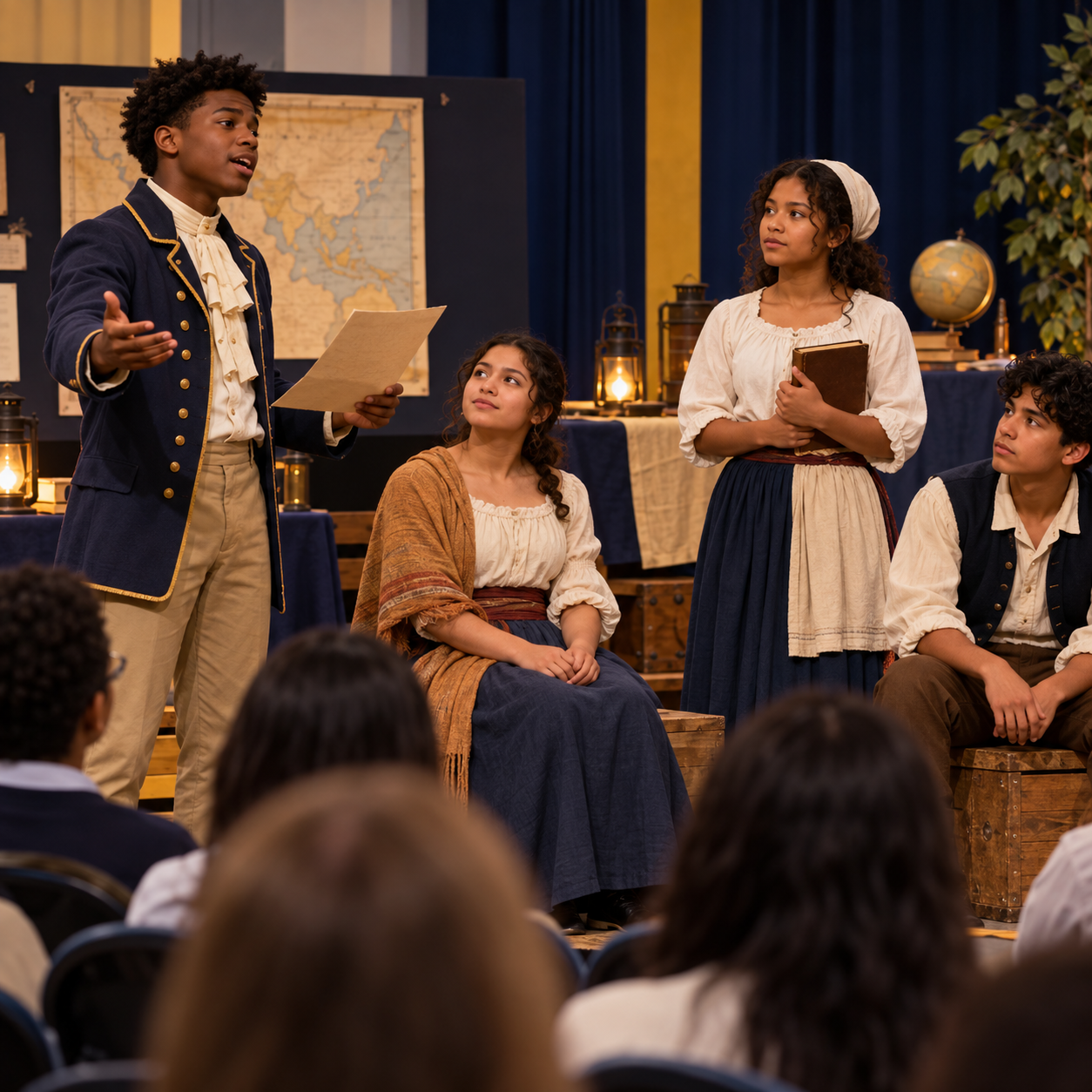
A strong Performance is a live historical argument told through drama. Your script, characters, scenes, costumes and props should communicate what your evidence proves—not simply retell events. Use these steps to plan and revise your entry.
01 · Research the historySelect a focused topic connected to the 2027 theme, Innovation in History: Impact, Influence, Change. Study primary and secondary sources, compare perspectives, record source details and form a defensible historical argument.
02 · Plan the dramatic storyIdentify the historical conflict, people, setting, turning points, consequences and the conclusion you want viewers to understand. Use a short scene-by-scene outline to show where your evidence and argument appear.
03 · Write your own scriptCreate original dialogue and narration grounded in research. Give characters historically supportable viewpoints. When words are imagined rather than documented quotations, do not present them as authentic quotes.
04 · Design staging and propsChoose costumes, props, sound or projections only when they clarify the historical argument. Plan simple entrances, transitions, and changes; participants must move their own props and operate any equipment during the performance.
05 · Rehearse and revisePerform the complete script aloud, time it, check clarity and pacing, and ask for feedback. Revise to make your evidence, competing perspectives, theme connection and historical significance unmistakable.
06 · Prepare for the judgesPractice setup, the live performance, prop removal and the judges' interview. Prepare the required title page, process paper and annotated bibliography; check the current CMHD submission instructions.
Performance rules you must follow
10-minute maximumThe live performance must not exceed 10 minutes. Timing begins after you announce only the title and participant names. Leave a little time for natural pauses.
5 minutes to set upOnly participating students set up the presentation space and performance equipment. Plan materials so this can be done in five minutes or less.
5 minutes afterwardYou have five minutes after the performance to remove props and participate in an interview with judges.
No audience participationYou may portray an audience or address an imagined crowd in character, but you cannot interact with judges or require audience members to participate.
Original student productionYour performance must be dramatic, scripted from your research, created by participating students and presented live. It cannot simply be a lecture or oral report. Student participants operate any media used.
Required written materialsInclude a title page, a process paper of no more than 500 words, and an annotated bibliography divided into primary and secondary sources. Follow the current NHD rule book and CMHD submission directions.
WolfOS checkpoint: Before rehearsing costumes and movement, ask: What is our historical claim? Which sources support each scene? What would the audience understand about innovation, impact, influence and change? Acting is the format; historical reasoning is the goal.
Chicago Metro History Day — official rules ↗ · National History Day — Performance checklist ↗ · WolfOS Graphic Organizer Library ↗