02 · Creating your website
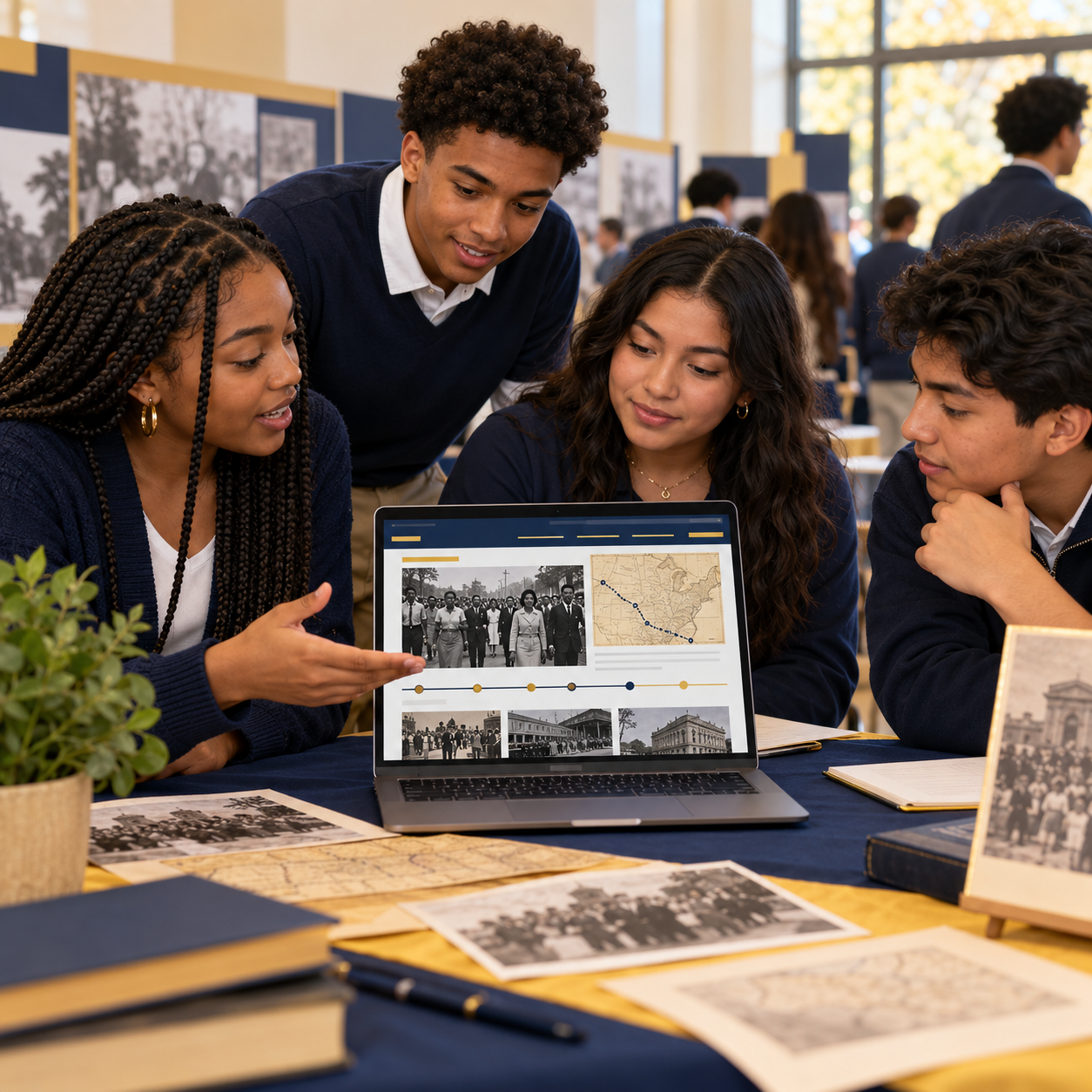
Your History Day website is a collection of connected pages that presents a research-based historical argument using text, primary sources, images and carefully selected media. Do not treat it as an online essay or a collection of pictures. Make your argument and the evidence supporting it easy for a visitor to follow.
Competition requirement: Build your actual History Day entry in
NHDWebCentral, the required NHD website editor. WolfOS is your learning and planning hub, not the submission platform.
01 · Research and develop your claimChoose a focused topic related to the 2027 theme, Innovation in History: Impact, Influence, Change. Use primary and secondary sources to establish context, differing perspectives, causes, consequences and historical significance. Write a defensible thesis.
02 · Map the visitor's journeySketch your homepage and connected sections before building. Plan a logical path such as historical context, the innovation or turning point, impacts and perspectives, and long-term significance. Each section should support the argument.
03 · Build in NHDWebCentralStart a website entry in the official NHD editor. Add a clear menu and link pages together. Use readable headings, accessible contrast, legible captions and a design that works without the visitor needing an explanation.
04 · Select and analyze evidenceIntegrate source excerpts, photographs, maps and other materials with brief original historical analysis. Give appropriate source credits. Use multimedia only when it strengthens the argument, and keep its combined runtime within the contest limit.
05 · Add required documentationMake a compliant homepage with required entry information and word/media counts. Embed your process paper and annotated bibliography as PDFs within the website navigation. Divide bibliography sources into primary and secondary.
06 · Test, revise and submitClick every navigation link; verify readability, citations, media, word count and page loading. Ask a classmate to follow the argument. Submit the official NHDWebCentral URL and complete CMHD registration requirements by the current deadlines.
Website contest rules at a glance
Official editor onlyCompetition websites must be created in NHDWebCentral. A site made in Wix, Google Sites or another builder must be rebuilt in NHDWebCentral to compete.
1,200 student-composed wordsNo more than 1,200 visible words written by students, counting applicable captions, charts, timelines and student-written media text. Use the official word-count guidance for exclusions, including direct source quotations and required navigation.
3 minutes of multimedia totalAll included audio and video clips combined may not exceed three minutes. Count media across the entire website, not three minutes on each page.
Homepage requirementsInclude entry title, student name(s), division and category, number of visible student-composed words, total multimedia running time, process-paper word count and a menu to the site's sections. Do not include your teacher or school name.
Process paper and bibliographyInclude a process paper of no more than 500 words and an annotated bibliography separated into primary and secondary sources. CMHD requires PDF documents embedded in the site and accessible through its navigation—not merely external links.
Stable, original and connectedAll pages must be connected through navigation, display consistently when refreshed, and represent students' original work. Cite incorporated media and sources. Check the official rule book for detailed restrictions.
WolfOS evidence checkpoint: On every page, ask: What does this section prove? What historical sources support it? How does it connect to innovation, impact, influence or change? A beautiful website cannot replace a strong historical argument.
Academic integrity: NHD guidance for the 2026–27 contest prohibits using generative AI to create the student entry. Use teacher-approved instructional planning resources, but create and write the competition project yourselves.
CMHD official contest rules ↗ · NHDWebCentral instructions ↗ · WolfOS Graphic Organizer Library ↗